
Table of Contents
Artificial Intelligence
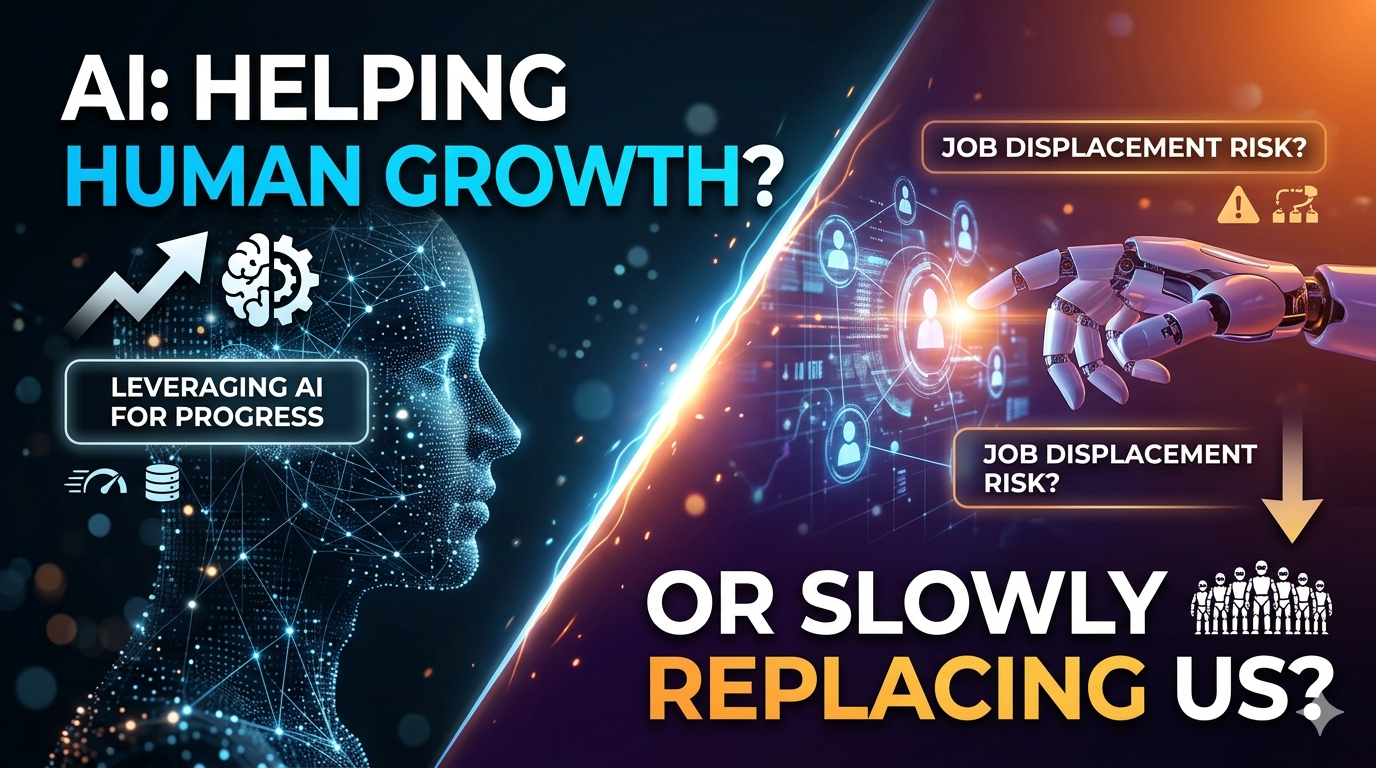
Artificial Intelligence (AI) is no longer a distant or futuristic concept it has become a major part of our everyday lives. From automation tools to smart assistants, AI technology is transforming how we work, communicate, and make decisions. As industries continue to adopt this powerful innovation, one important question arises: is AI helping human growth, or is AI replacing jobs at a large scale?
This question is becoming more relevant as businesses and individuals rely heavily on artificial intelligence for efficiency and productivity.
The Rise of Artificial Intelligence in Everyday Life
The rapid growth of artificial intelligence technology has changed industries across the globe. Companies are using AI automation to streamline processes, reduce costs, and improve accuracy. At the same time, individuals are using AI-powered tools for content creation, research, and problem-solving.
From healthcare to education, AI in daily life is becoming unavoidable. Tasks that once required hours of human effort can now be completed in minutes. While this progress increases efficiency, it also raises concerns about AI replacing jobs, especially in roles that involve repetitive or predictable tasks.
As technology continues to evolve, the presence of AI in everyday activities will only increase.
How AI is Helping Human Growth
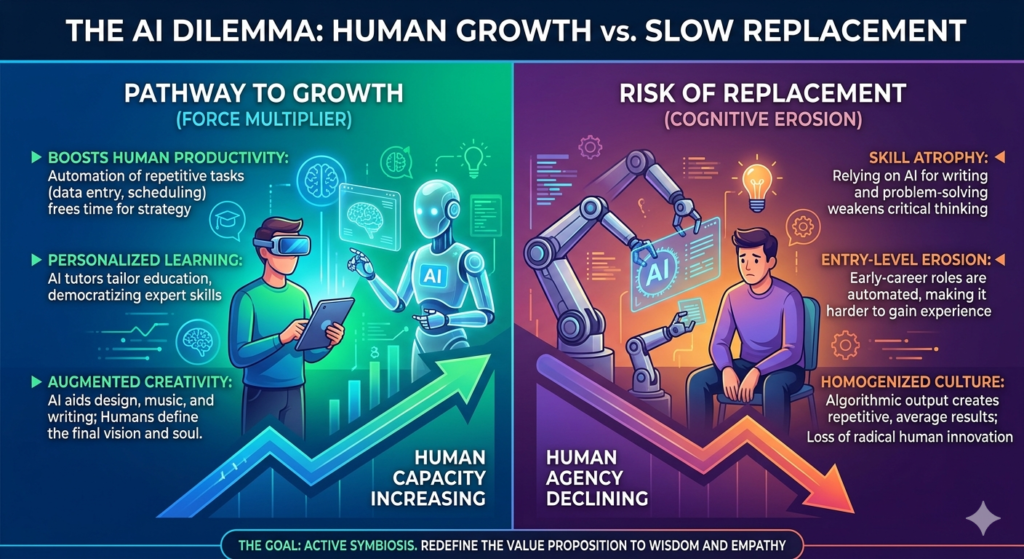
Despite the concerns, AI provides several benefits that support human development. One of the biggest advantages of artificial intelligence is its ability to enhance productivity and creativity.
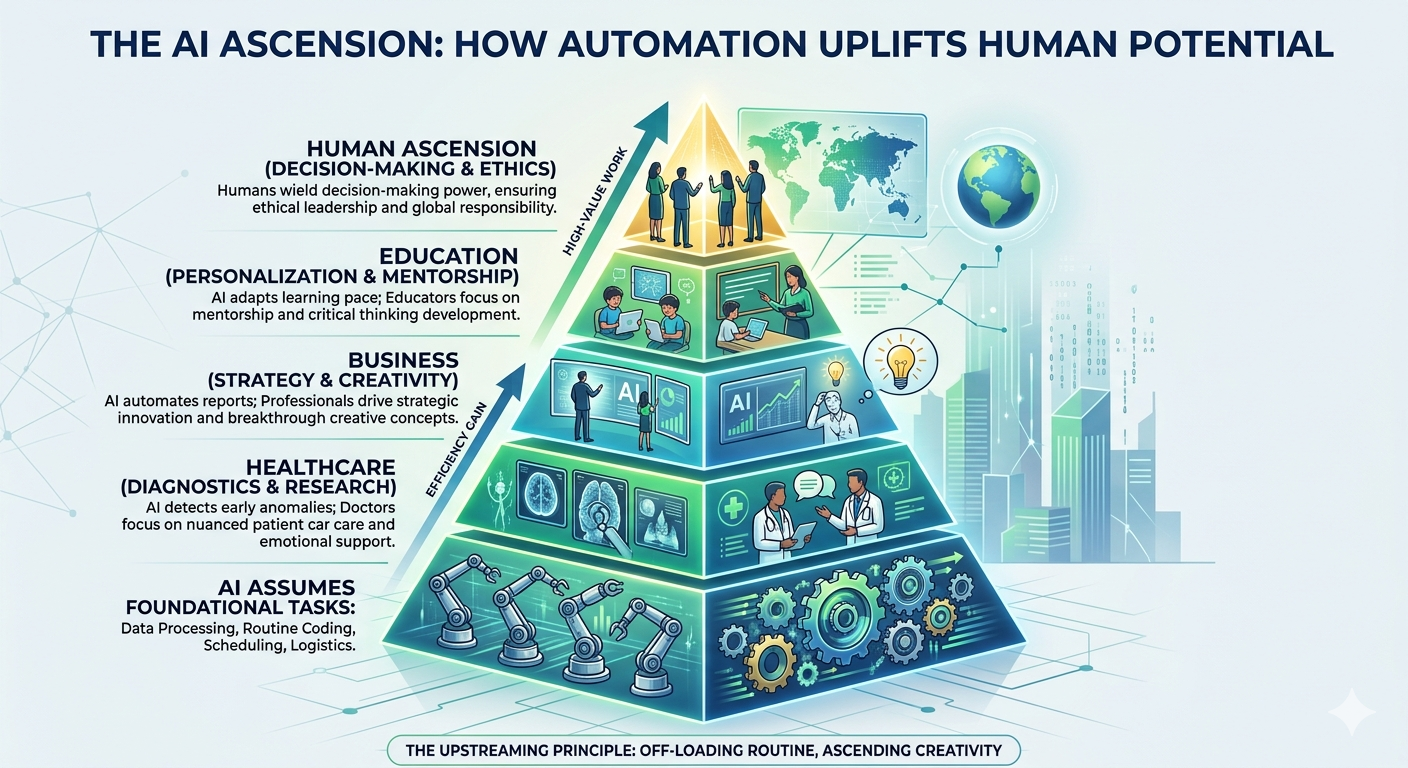
In healthcare, AI helps doctors detect diseases earlier and improve treatment outcomes. In business, AI tools for productivity automate routine tasks, allowing employees to focus on strategic work. In education, AI powered learning platforms provide personalized experiences for students.
These advancements show that AI is not just about AI replacing jobs, but also about improving how humans work and learn. By reducing manual effort, AI gives people more time to focus on innovation, creativity, and decision-making.
The Fear of AI Replacing Jobs
The concern about AI replacing jobs is one of the biggest challenges in today’s digital world. Automation is already affecting roles such as data entry, customer support, and administrative work.
This has led to growing concerns about:
- Job loss due to AI
- The future of employment
- Human relevance in an AI driven economy
As machines become faster and more efficient, many people worry that AI replacing jobs will reduce employment opportunities. This fear is especially strong among workers in industries that rely on routine tasks.
However, it is important to understand that technological change has always disrupted job markets before creating new opportunities.
The Future of Work: Humans and AI Collaboration
The future is not simply about AI replacing jobs, but about how humans and AI can work together. While some jobs may disappear, new roles are emerging in fields like AI development, machine learning, and data science.
The future of work with AI depends on adaptability. People who learn new skills and understand how to use AI tools will have a clear advantage. Instead of competing with AI, individuals should focus on collaborating with it.
This shift highlights that AI replacing jobs is only one side of the story. The other side is job creation and innovation driven by technology.
Why Human Skills Still Matter
Even with advanced capabilities, AI cannot replace essential human qualities. Skills such as emotional intelligence, creativity, and ethical decision-making remain unique to humans.
AI can analyze data and generate results, but it cannot truly understand emotions or human experiences. These skills are critical in leadership, communication, and problem-solving.
This proves that while AI replacing jobs is a real concern, humans still play a vital role in shaping the future.
Conclusion: Growth or Replacement?
Artificial Intelligence (AI) is reshaping the way we work, and many wonder if it is helping humans grow or replacing jobs. While AI could displace millions of roles in industries like manufacturing, customer service, and administration, it also creates new opportunities in AI development, data analysis, and digital innovation. Experts agree that human skills creativity, emotional intelligence, and ethical decision making remain irreplaceable. The key to thriving in 2026 is upskilling, adaptability, and collaborating with AI to harness its power without losing human potential.
Final Thought
The real question is not “Will AI replace humans?” but “How can humans grow with AI?”
Those who adapt, learn, and embrace change will succeed in this new era. The future belongs to people who understand how to use AI effectively and responsibly.